The Football Defender’s Guide to Corner Defence
Defending corners requires a coordinated system, not simply tall players standing near the goal. Stadium View’s tactical analysis separates the main options into zonal marking, man-to-man marking and....
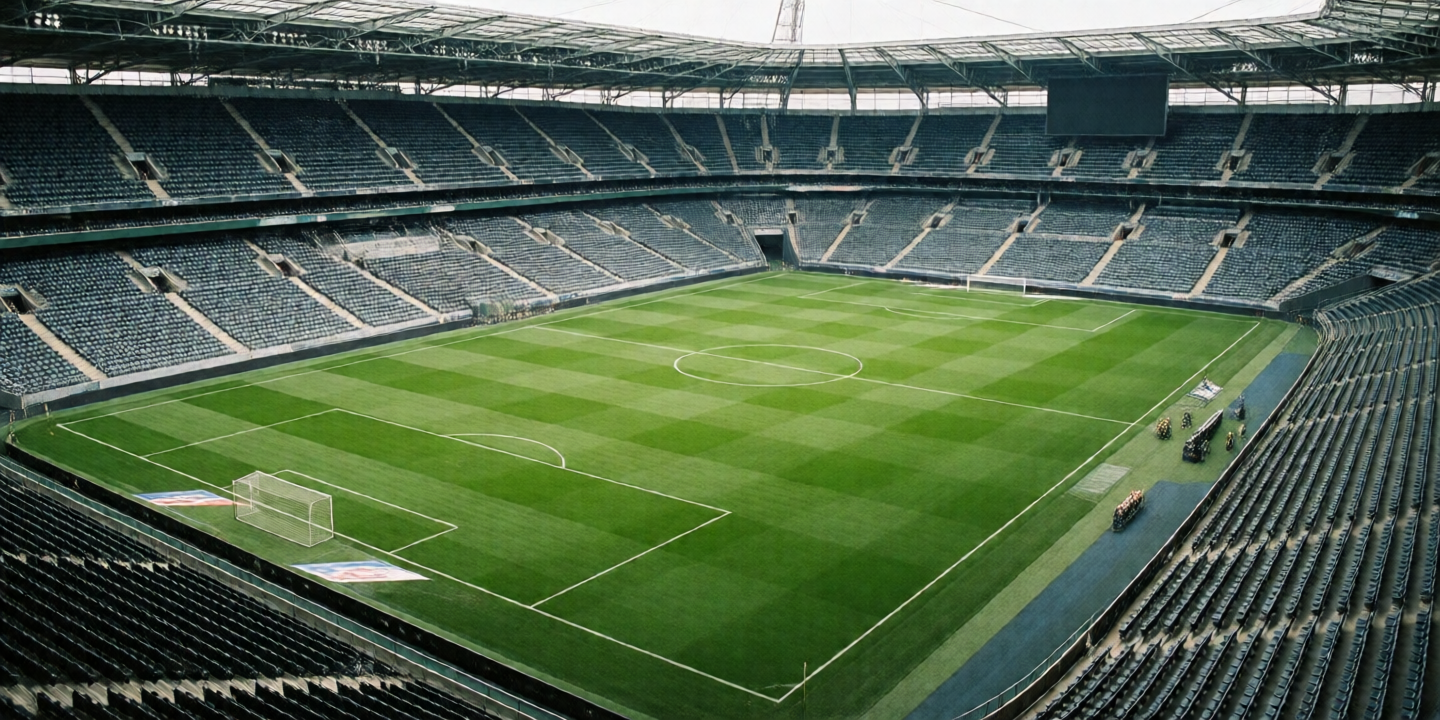
Defending corners requires a coordinated system, not simply tall players standing near the goal. Stadium View’s tactical analysis separates the main options into zonal marking, man-to-man marking and hybrid defending, with the best choice depending on squad profile, opponent movement and delivery quality. FIFA Laws of the Game permit unlimited defensive organisation before the kick, but the ball remains live immediately after contact. A practical setup usually protects the six-yard box, assigns one or two players to the near-post zone, places a blocker-screen defender outside the main line and keeps at least two players ready for a counterattack. Zonal systems often use seven or eight defenders inside the penalty area, while man-marking becomes vulnerable when runners attack at speed. The strongest recommendation is to train one primary structure and one emergency variation, then rehearse the first clearance and second-ball reaction separately.
Imagine watching a corner with the replay paused after every run. The striker begins outside the penalty area, the near-post defender checks his shoulder twice, and one midfielder is already calculating the counterattack lane. Nothing looks dramatic yet, but one missed handover can change the entire match within five seconds.

Want a clearer tactical framework before studying match patterns?
What the Analysis Covers
The comparison covers three corner-defending systems: zonal marking, man-to-man marking and a hybrid model combining both. A comparative review of corner situations can record first contact, shot location, clearance direction and whether the defending team retains possession. A league-wide study would be needed to establish broader patterns, while the same framework can help identify recurring operational errors.
A useful reference point is the six-yard box, because that is where goalkeeper access, attacking momentum and rebound danger overlap. The analysis can also track whether the first defender attacks the ball or merely reacts to it. This distinction matters more than many junior players realise: a stationary defender may technically occupy the correct zone while still losing the contest because the attacker arrives with greater speed.
According to FIFA’s Laws of the Game, a corner kick is awarded when the whole ball passes over the goal line after touching a defending player, without a goal being scored. That definition is basic, but the tactical consequence is not. The restart can produce a direct shot, a short-corner combination, a recycled cross or a fast defensive counter.
The analysis criteria
- First contact: Which team touches the ball first?
- Danger location: Near post, central six-yard area, penalty spot or far post?
- Defensive action: Header, volley block, catch, punch or recovery run?
- Second phase: Does the defence clear beyond the penalty area?
- Transition: Can the defending team counter within 8–12 seconds?
Winning the first header does not always eliminate danger. A short initial clearance can return to the attacking team. Therefore, “clear the ball” is incomplete coaching advice. The real instruction should be “clear away from the central rebound lane, then step out together.”
How Should the Setup Begin?
A reliable setup begins with role allocation, goalkeeper communication and a visible reference line between the near post and penalty spot. Before the corner is taken, defenders should know who protects the near zone, who attacks the central delivery, who tracks late runners and who stays outside for transition defence. The first command should be issued by the goalkeeper, not by three anxious defenders at once.
Imagine a defensive unit with one player on the near post, three zonal defenders across the six-yard box, two markers on the strongest aerial threats and two players outside the area. That structure creates immediate protection without placing every player inside the goalmouth. In contrast, a team that sends eight players between the goal line and penalty spot may appear secure but often has no outlet after a clearance.
Stadium View’s World Cup coverage frequently evaluates these details through player height, starting position and delivery type rather than relying only on goals conceded. A goalkeeper such as Thibaut Courtois, for example, may defend more aggressively outside the six-yard box than a goalkeeper who prefers to remain on the line. The system must fit the goalkeeper’s claim range; copying Real Madrid’s structure without copying its goalkeeper profile is a rather expensive form of imitation.
A practical pre-kick checklist
- Identify the opponent’s best aerial attacker.
- Mark the near-post zone and central six-yard space.
- Confirm who tracks short-corner movement.
- Leave one defender outside the box for the first pass.
- Decide where the first clearance must travel.
- Reconnect the defensive line immediately after contact.
To compare goalkeeper roles and set-piece responsibilities, use our goalkeeper positioning guide alongside the corner analysis.
Zonal defending
Zonal defending assigns players to spaces rather than individual attackers. Its main strength is density: seven or eight defenders can protect the goalmouth, central six-yard area and near-post corridor while facing the ball. It also reduces the risk of a defender being dragged 6 or 7 metres away by a decoy run.
However, zonal marking fails when the first line does not challenge incoming runners. Attackers can then build momentum, and a defender who owns the correct space may still lose the aerial duel. Short corners create another problem because the original zone can become irrelevant after a backward pass, forcing defenders to communicate and shift rather than freeze.
Man-to-man defending
Man-to-man marking gives each defender a primary opponent. The purpose is clear: stop the attacker from finishing, especially when the opponent has dominant aerial threats such as Virgil van Dijk or Harry Kane. This method can be effective when defenders are physically strong, disciplined and comfortable tracking movement through traffic.
Its weakness is equally clear. A blocker, double movement or screen can create separation, and one lost duel may open the entire central lane. Coaches often say a player is “marking tightly,” but the measurable question is whether he can maintain contact while still seeing the ball. If he watches only the attacker, the delivery wins the argument.
Hybrid defending
Hybrid defending combines fixed zones with selected man-marking assignments. For example, four defenders may protect the six-yard box, three players may track designated attackers and two players may remain outside. This approach is often the most adaptable option because it protects critical space while respecting elite aerial threats.
The trade-off is training complexity. Players must understand when a runner belongs to them and when he is passing through their zone. Hybrid structures can handle late central runs effectively, but they can also produce verbal confusion. The lesson is not to abandon the model; it is to define handover calls such as “stay,” “pass” and “step” before match day.

Where Systems Hold Up
Strong corner defence usually comes from attacking the ball before it reaches the target zone. Proactive first contact is generally more likely to produce a clean clearance than passive positioning. This is a coaching principle rather than official competition data and should be assessed alongside match context.
Zonal defending can be particularly effective against crowded near-post deliveries. Fixed reference points can limit how far attackers move the defence, while giving the goalkeeper a clearer route to punch or catch. Man-to-man defending can perform better against isolated star attackers when the assigned defender begins side-on, keeps an arm’s length of contact and adjusts his body after the kicker’s approach.
A separate detail deserves attention: the direction of the clearance. Headers sent toward the touchline can create fewer immediate central rebounds than headers directed straight forward. When first contact travels toward the flank, the attacking side may have fewer immediate central-rebound opportunities. By contrast, central clearances can create more opportunities for attackers to recover the ball than clearances directed toward the flank. That is a useful training target, not merely a theoretical preference.
What strong corner defence usually includes
- A goalkeeper who communicates before the delivery.
- A first-line defender who blocks or delays the runner.
- Aerial players who attack the ball, not the attacker’s body.
- A designated second-ball midfielder.
- A clear exit route toward the flank.
- A compact step-out after the first clearance.
For more detail on transition structure, see the defending second balls and counterattacks resource.
Get the broader match context before judging one corner in isolation.
Where Systems Break Down
A common failure is not poor heading ability but poor spacing after the first movement. Defenders may initially occupy the correct positions, then follow attackers too far toward the far post or penalty spot. Such movement can open a seam behind them, particularly when the corner taker delivers with an inswinging cross between the six-yard line and penalty spot.
A second major weakness is the short-corner response. When the attacking team uses a second player near the corner flag, a slow defensive reorganisation can allow a better crossing angle or a cutback. Such a delay can create a better crossing angle or a cutback toward the edge of the area. The defender nearest the ball must step out quickly, but the remaining players must also compress the central space rather than all chasing the receiver.
A third risk is goalkeeper uncertainty. A keeper who takes one step forward and then retreats creates congestion without claiming the delivery. Research from StatsBomb has repeatedly highlighted the importance of distinguishing delivery quality, defensive action and outcome instead of treating every conceded corner as one identical event. That approach is sensible: a perfect six-yard cross and a mishit clearance should not receive the same tactical diagnosis.
Troubleshooting common breakdowns
- Attackers win the near post: Move the near-post defender 0.5–1 metre closer to the delivery lane and make the first challenge earlier.
- The goalkeeper is screened: Assign one defender to remove the legal screening route without abandoning the central zone.
- Short corners cause panic: Use a named trigger, such as “out,” and send only the nearest defender initially.
- Clearances return centrally: Practise heading toward the touchline and place the second midfielder behind the first contact.
- Late runners arrive unmarked: Use hybrid handovers and require a final shoulder check before the kick.
One contrarian recommendation follows from these breakdowns: do not automatically place your tallest defender on the tallest attacker. If that defender is your best central zone protector, moving him into a chase duel may reduce total defensive security. The correct assignment is the one that prevents the highest-value chance, not the one that looks most logical in the team sheet.

Would This Approach Work?
A hybrid system works best as the default when the team can rehearse communication consistently. For an inexperienced youth team, a simpler zonal structure with one or two fixed markers is usually more reliable than a sophisticated model that creates three handover decisions in 2 seconds. For a physically dominant squad facing repeated near-post crosses, zonal defending may offer the cleaner baseline.
The decision should be based on evidence collected over at least 10 competitive corners, not on one spectacular goal. Track first contact, shot location, clearance distance, second-ball recovery and goalkeeper involvement. If the team concedes shots from the central six-yard area, adjust the central zone; if it concedes from cutbacks, improve short-corner coverage and the edge-of-box screen.
My recommended training sequence is simple:
- Rehearse the starting positions without an attacker.
- Add passive runners and practise handovers.
- Add full-speed blockers and near-post runs.
- Introduce short corners and recycled deliveries.
- Finish every repetition with a counterattack.
- Review video using the same five metrics.
UEFA’s technical reports describe set plays as decisive moments in elite football. The tactical principle is clear: a corner can expose whether a defensive structure survives pressure. A corner may last fewer than 10 seconds, yet it can decide a knockout tie, alter expected-goals momentum and expose whether a defensive structure survives pressure.
Read Stadium View’s FIFA World Cup 2026 team tactics and predictions for tournament-specific examples, especially when assessing how Brazil, England, France and Argentina defend dead-ball situations.
Want to apply these principles to upcoming World Cup matches?
A Training Drill That Actually Transfers
The best corner-defending drill is not a static line of defenders waiting for a predictable cross. Set up 8 defenders against 6 attackers, place two attackers near the corner flag for short-kick options and mark a 2-metre central target corridor. The coach should vary inswinging, outswinging and clipped deliveries while recording first contact and the next action.
Run 12 repetitions, then change the defensive structure from zonal to hybrid. The unusual but important constraint is to award the attacking team a point only for a shot or controlled second possession inside 20 seconds. This rewards the defence for clearing intelligently rather than simply heading the ball 4 metres away. After every repetition, ask one question: “Who owned the second ball?”
The drill also reveals physical limitations. A player may understand his role but lack the acceleration to track a late runner, while another may win headers but make poor decisions under pressure. Record these differences over three sessions, ideally 36 repetitions, before changing the system. Numbers will not replace coaching judgement, unfortunately, but they usually expose which judgement needs better evidence.
Consider reviewing the complete football set-piece training plan before building a weekly session.
One final resource may help if you are comparing match patterns across teams.
Frequently Asked Questions
Q: What does defending a corner mean?
A: Defending a corner means preventing the attacking team from creating a goal or controlled shot from a corner kick. The defence must organise player positions, challenge the first delivery, protect the goalkeeper and deal with the second ball. FIFA’s Laws of the Game define the restart, but coaches decide whether to use zonal, man-to-man or hybrid marking. A complete defensive action should also include an immediate counterattack or safe possession after the clearance.
Q: How do you defend corners step by step?
A: Start by assigning zones, markers, goalkeeper duties and an outside transition player before the kick is taken. Next, identify the opponent’s best aerial threat, watch for a short corner and attack the delivery rather than waiting beneath it. After first contact, clear toward the flank, step out together and track the second ball for at least 8–12 seconds.
Q: What is the difference between zonal and man-to-man corner defence?
A: Zonal defence protects predetermined spaces, while man-to-man defence assigns each defender to an attacking player. Zonal marking offers stronger control of the six-yard box, but it can fail against fast runners; man-marking follows threats more directly, but screens and blocks can create separation. Hybrid defending combines both methods and usually requires the most communication training.
Q: Is hybrid defending better than zonal marking?
A: Hybrid defending is better when a team can communicate handovers and must control both dangerous space and elite aerial attackers. It may outperform pure zonal marking against late runners, but it can create confusion if players do not know when to pass an opponent to a teammate. For youth or newly assembled teams, a simpler zonal structure may produce fewer errors.
Q: Why does corner defence fail even when every player has a marker?
A: Corner defence can fail because a marker loses sight of the ball, follows a decoy too far, or allows the attacker to build running momentum. Passive positioning can produce fewer clean clearances than proactive challenges. The solution is to train body orientation, handover calls, goalkeeper commands and the direction of the first clearance.
Q: How many players should defend a corner?
A: Most teams defend with 7–9 players inside or around the penalty area, while 1–3 players remain available for transition. The exact number depends on the opponent’s delivery quality, your goalkeeper’s claim range and the danger of the counterattack. Sending all 11 players deep may reduce immediate goal risk but usually makes the next phase harder to control.
Q: Does defending corners cost anything?
A: Learning to defend corners costs no special fee beyond normal coaching, equipment and training time. A basic session needs footballs, cones, bibs and a goal, while video analysis can be added through free match footage or paid analytics platforms. Allocate 20–30 minutes weekly, record at least 10 competitive corners, and measure first contact, clearance direction and second-ball recovery.
Reliable corner defence is built through repeatable roles, measurable review and calm communication, rather than dramatic last-second bravery. Stadium View recommends choosing one primary structure, testing it over 10 or more match situations and correcting the first-contact and second-ball problems separately. Start with the six-yard box, coach the exit route, and only then add complexity.
See the latest Stadium View tactical coverage and continue refining your set-piece decisions.